Target Toy Catalog 2026: When the Target Holiday Catalog Comes Out (and What's on It)
Our Top Pick
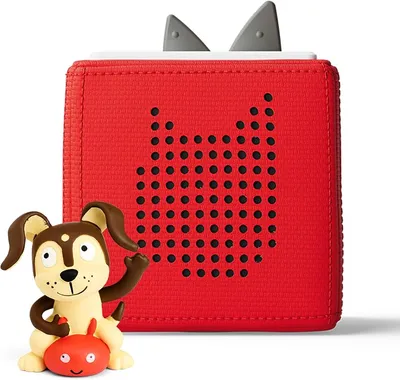
Toniebox Starter Set Audio Player
The best pick for a grandchild aged 2 to 8 who needs something to do in the car or at bedtime without a tablet. Parents consistently like it because it is screen-free and genuinely independent.
Every fall the Target toy catalog lands with a thump — in stores, in some mailboxes, and online — and suddenly a grandchild has circled nineteen things. Here’s the honest version: in recent years Target has put its holiday toy list out in late September or early October, and you can browse the whole thing free on Target.com without waiting for paper. It’s a curated selection of highlighted toys, not everything Target sells. Knowing that one fact changes how you shop it.
What the Target Toy Catalog Is and Why It Matters
The Target toy catalog is a seasonal picture book of toys that Target wants to sell hardest between October and Christmas. In recent years it has been promoted under a “Top Toys” banner, published as a printed booklet in stores, mailed to selected households, and posted online in the toys section of Target.com.
It is marketing, and that’s fine — it’s also genuinely useful. A catalog gives a child a way to point at what they want without a screen involved, and it gives you a snapshot of what will be sold out in December.
What it is not is a complete list. Target sells many thousands of toys. The catalog highlights a slice of them, usually a few dozen to a hundred, chosen partly because the brands behind them bought in. A toy missing from the book is not a toy Target doesn’t carry.
Here’s the timing most grandparents care about, based on how recent years have gone. Confirm this year’s exact dates on Target.com, because they shift:
| What | Typical timing in recent years | Where to check |
|---|---|---|
| Holiday toy list released | Late September to early October | Target.com toys section |
| Printed catalog in stores and mailboxes | Through October | Store entrance, weekly ad |
| Target Circle Week savings event | Has commonly fallen in early October | Target Circle in the app or site |
| Black Friday toy deals | Week of Thanksgiving | Weekly ad |
| Last day for standard shipping by Christmas | Usually mid-December | Target’s help pages |
We’ll update this page once the 2026 catalog contents are confirmed rather than guess at them. If you want the wider view across retailers, our holiday toy list 2026 catalog dates guide tracks Target, Walmart, and Amazon side by side.
What the Research Says About Catalogs, Wish Lists, and Play
A toy catalog works the way a dessert menu with photographs works. Nobody walks in planning to order the lava cake. Then there’s a picture of it. Children are not being greedy when they circle everything — they are doing exactly what the page was designed to make them do.
That’s worth knowing, because it separates wanting from playing. The toys children ask for loudest are not always the ones they still play with in March.
The American Academy of Pediatrics looked at this directly. In a 2019 clinical report on choosing toys for young children, the authors reviewed the research and concluded that traditional, open-ended toys — blocks, puzzles, dolls, pretend-play sets, books — support language, problem solving, and social skills better than heavily electronic toys that do the talking and the thinking for the child.
One small study makes the point vividly. Researchers recorded 26 parent-infant pairs, with babies aged 10 to 16 months, playing with electronic toys, traditional toys, and books. Parents said fewer words and had less back-and-forth conversation during electronic toy play than during book or traditional toy play. It’s a small sample and one session, so don’t over-read it. But it matches what the AAP found across a broader body of evidence.
The practical takeaway for catalog season: the loud, battery-powered item on page three may be the thing that gets opened first and abandoned by February. The quieter thing — the building set, the story player, the art kit — is often the one that earns its shelf space.
How to Shop the Catalog Well
You don’t need the paper booklet, and you don’t need to shop early just because the catalog came early. You need about twenty minutes and a short list.
Browse the whole catalog online in five minutes
Go to Target.com, open the Toys category, and look for the holiday toy list or “Top Toys” collection page. In recent years Target has also published a flipbook version of the weekly ad, which you can page through like the printed catalog. You don’t need an account to look.
The advantage over paper is filtering. You can sort the same list by age, by price, and by rating — which turns a wish list into a shortlist fast.
Request the printed catalog the low-tech way
If a grandchild would genuinely enjoy circling things with a marker, printed copies have typically been stacked near store entrances during October, free to take. Mailed copies go to selected households, so there’s no reliable way to sign up for one. Grabbing two in store — one for you, one for them — is the simpler route.
Time your buying around Target Circle rather than the catalog
Target Circle is the free loyalty program, and Target Circle Week has commonly landed in early October, with a second savings push around Black Friday. Target has also historically run a holiday price adjustment policy, meaning if an item you bought drops in price during the season you may be able to claim the difference within a set window. Check the current terms before counting on it.
In plain terms: buying in October is fine for popular toys that may sell out, as long as you keep your receipts.
Choose one quiet gift and one building gift
That pairing covers most of what a child actually needs under the tree: something for the car and bedtime, and something that takes hours to make.
For the quiet half, the Toniebox Starter Set Audio Player is a screen-free audio player where a child places a small character figure on top to start a story or song. It suits ages 2 to 8, carries a 4.7 out of 5 rating on our site, and typically runs $80 to $100. Parents tend to like it for one specific reason: it replaces tablet time in the car without replacing it with silence.
For the building half, LEGO Friends sets — Heartlake City shops, vet clinics, cafés — are aimed at roughly ages 6 to 12, also rated 4.7 out of 5 on our site, and range from about $20 to $120 depending on the set. The small sets make perfect stocking fillers; the big ones are an afternoon-long project.
If you’d rather match by age than by category, our hot toys for Christmas 2026 by age guide breaks picks into toddler through teen.
| Pick | Ages | Typical price | Best for |
|---|---|---|---|
| Toniebox Starter Set Audio Player | 2–8 | $80–$100 | Car trips, quiet time, pre-readers |
| LEGO Friends | 6–12 | $20–$120 | Long builds, display, collecting |
Ship it to them, not to you
Shipping a toy to your house and then shipping it again to theirs costs twice and risks arriving late. Send it straight to the grandchild’s address, add a gift message, and include a gift receipt so a duplicate can be exchanged without anyone knowing what you paid.
Target has historically offered free standard shipping on orders over a set minimum, with faster paid options and a paid membership tier for same-day delivery. Order by early December for comfort, and check Target’s posted holiday shipping cutoffs — usually published in November — before you cut it fine. Store pickup and drive-up are useful backstops if you live near the family.
What to Look For and What to Avoid
Catalogs are designed to be persuasive. A few habits keep you from being persuaded into the wrong thing.
Treat the age label as a safety line, not a suggestion
The age range printed on a box is a safety and ability rating, not a comment on how clever a child is. The U.S. Consumer Product Safety Commission is clear that toys with small parts are not for children under 3 because of the choking risk, and that rule holds even when a toddler is advanced.
At the other end, buying two years up “so it lasts” usually backfires. A build that’s too hard gets abandoned, and the child decides they’re bad at it.
Run the parent test: noise, mess, batteries, storage
Before you buy, ask four questions. Does it make noise you can’t turn off? Does it shed glitter, sand, or 400 pieces? Does it eat batteries, and are they included? And where does it live when it’s not being played with?
None of these are reasons not to buy — they’re reasons to buy the version that fits the house. A craft kit in a lidded case beats the same kit in a cardboard tray.
Be skeptical of “catalog exclusive” and “limited” language
Scarcity language is the oldest tool in the catalog. Some exclusives are real, but most popular toys restock through December, and a genuine sell-out is usually visible well before then. If a toy is on every retailer’s list this year, it will likely be discounted in January.
Also compare the catalog price against the same item’s everyday listing on Target.com. A “featured” price is not automatically a reduced one.
Apply the March test
The honest measure of a gift is whether it’s still in use three months later. Toys that pass tend to share traits: more than one way to play with them, no single correct outcome, and the ability to be added to next birthday. Sets, building systems, and story-based toys do well. Single-function electronic novelties usually don’t.
For a wider look at what’s getting attention this season, see our hottest toys for Christmas 2026 guide.
Common Mistakes to Avoid
A handful of catalog-season mistakes come up every year, and all of them are easy to sidestep.
- Buying everything circled. A child circling 19 toys is responding to pictures. Ask which three they’d keep if they had to choose — the answer is usually steady.
- Not asking about duplicates for the big-ticket item. For a gift over roughly $75, a quick word with the parents avoids two of the same thing arriving. For small gifts, surprise away.
- Skipping the gift receipt. It costs nothing and turns an awkward duplicate into a painless exchange.
- Waiting for a better price on a genuinely hot toy. The discount in late December is often on the toys nobody wanted.
- Forgetting the batteries. If the box says batteries not included, buy them with the toy. Christmas morning is the worst possible time to discover this.
- Ignoring the parents’ storage reality. A gift that has nowhere to go becomes a gift that quietly disappears.
One last thing worth remembering: the catalog is a tool for the child to tell you what they’re interested in this year, not a list you have to shop from. A grandchild who circles six vet-clinic sets has told you something useful about what they love, and you can act on that in any aisle, in any store. Trust us on this one — the look on their face comes from being understood, not from the page number.
Sources:
- Selecting Appropriate Toys for Young Children in the Digital Era (AAP Clinical Report, Pediatrics, 2019) — Supports the finding that traditional, open-ended toys better support language, problem solving, and social development than heavily electronic toys.
- Association of the Type of Toy Used During Play With the Quantity and Quality of Parent-Infant Communication (JAMA Pediatrics, 2016) — Source for the 26 parent-infant pairs study showing fewer parent words during electronic toy play than book or traditional toy play.
- U.S. Consumer Product Safety Commission — The federal agency responsible for toy safety standards, including the small-parts choking rules that apply to toys for children under 3.
- Target.com — Where the holiday toy collection and current toy listings are published online.
- Target Help — Shipping and Delivery — Reference for Target’s current shipping options, free shipping minimums, and posted holiday delivery cutoffs.
- Target Circle — Reference for the free loyalty program and Target Circle Week savings events.
Full Comparison: Our Picks
Toniebox Starter Set Audio Player
The best pick for a grandchild aged 2 to 8 who needs something to do in the car or at bedtime without a tablet. Parents consistently like it because it is screen-free and genuinely independent.
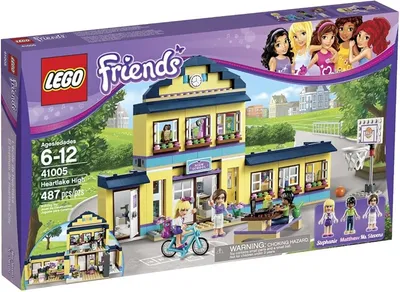
LEGO Friends
A reliable building gift for ages 6 to 12, with sets small enough for a stocking and large enough to fill an afternoon. Strong replay value once the build is done.
Frequently Asked Questions
When does the Target toy catalog come out in 2026?
In recent years Target has released its holiday toy list in late September or early October, with printed catalogs appearing in stores and in some mailboxes through October. As of early October 2026, check the toys section of Target.com and the weekly ad for the current year's list. Exact release dates shift year to year and Target does not announce them far in advance.
Can I see the Target holiday catalog online?
Yes. Target typically posts its holiday toy collection on Target.com in the Toys category, and publishes a digital flipbook version of the weekly ad that you can page through like the printed booklet. No account or sign-in is needed just to browse, and the online version lets you filter by age and price, which the paper one cannot.
How do I get the Target toy catalog mailed to me?
There is no reliable public sign-up for the mailed copy — Target sends printed catalogs to selected households. The simpler route is to pick up a free copy near the entrance of a Target store during October, when they are typically stacked for the taking. Grab two if a grandchild likes circling things with a marker.
When should I order Target toys to arrive before Christmas?
Aim to place online orders by early December for standard shipping, and check Target's posted holiday shipping cutoffs, which are usually published in November and fall around mid-December for standard delivery. Store pickup and drive-up are useful backups later in the month if you live near the family. Shipping directly to the grandchild's address saves both time and a second round of postage.
Is Target's Top Toys list the same thing as the toy catalog?
They largely overlap. In recent years Target has promoted a curated "Top Toys" holiday list online and published a printed toy booklet covering much of the same selection. Both are marketing selections of highlighted toys rather than Target's full toy inventory, so a toy missing from the list may still be in stock.