Best Music Gifts for Grandkids (Every Age, No Toy-Grade Junk)
Our Top Pick
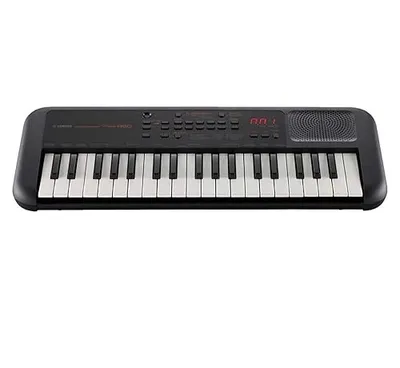
Yamaha PSS-A50 Mini Keyboard
37-key compact keyboard with real instrument sounds. Perfect starter piano for 6+ without toy-grade disappointment.
A music gift can spark a lifelong interest — but only if you give a real instrument, not a toy.
I’ve watched plenty of grandparents buy a flashy plastic keyboard or a “kids’ guitar” that sounded like a cat in distress, and the child lost interest in a week. I’ve also watched a kid who got a real Loog 3-String guitar at age 5 become a serious guitarist by 12. The difference wasn’t the kid — it was the quality of the starter instrument.
Here’s how to give a music gift that actually works.
The principle: real instruments only
The most important rule for music gifts: buy something that sounds good.
Kids can hear the difference between a real guitar and a toy one, between a real keyboard and a plastic one. If the instrument sounds cheap, the kid internalizes “music makes bad sounds” — exactly the opposite of what you want.
You don’t need to spend $500 to give a real instrument. $70-110 gets you a genuinely good starter instrument in most categories. But you should avoid the $20-40 price range — that’s the toy-grade zone that kills interest.
The picks by age
Ages 3-5: Percussion and movement
At this age, it’s about rhythm and joy, not technique.
Melissa & Doug Band-in-a-Box Percussion Set ($20-35). 10 real wooden percussion instruments — tambourine, maracas, wood blocks, small cymbals, clapper. They make real instrument sounds (not synthetic). Louder than parents prefer, joyful for kids. Under $35 and will be used for years.
A kid-sized xylophone ($15-40) with real metal bars (not plastic) is another great option.
Ages 4-9: First real instrument
This is when serious first-instrument gifting starts.
Loog 3-String Kids Guitar ($70-110). This is the clever pick. It’s a real acoustic guitar — real wood, real nylon strings — but with only 3 strings instead of 6. This makes chord-learning much easier for small hands. A 5-year-old can learn to play recognizable songs on a Loog within weeks. If they stick with it, they can move to a real 6-string by age 9-10.
Yamaha PSS-A50 Mini Keyboard ($70-110). 37-key keyboard with real Yamaha instrument sounds. Small enough for a bedroom or closet. Connects to apps for piano-learning if desired. Perfect “is piano going to stick?” trial for 6-8 year olds.
A real ukulele ($40-80 — Kala, Cordoba, Luna) is another great option at this age. Ukulele is easier to learn than guitar and sounds great from day one.
Ages 9-14: Serious starter instruments
By 9-10, a musically-interested kid is ready for a real beginner instrument.
A proper 6-string acoustic guitar ($100-200):
- Yamaha FG800 ($200) — industry standard beginner acoustic
- Fender CD-60S ($180) — another classic
- Taylor Academy 10 ($450-500) at the higher end
- Fender Squier Stratocaster starter pack ($200-300) for the kid who wants electric
A 61-key digital piano ($200-400):
- Yamaha PSR-E373 or similar — touch-sensitive keys that teach real piano technique
- Alesis Recital starter keyboards in the same range
A real ukulele — upgraded from the kid version to a proper tenor ukulele ($80-150).
A violin starter pack ($150-300) for the kid taking real lessons. Cremona or similar beginner brands. Always coordinate with parents and the teacher on brand/size.
Ages 14+: Teen music gifts
Teens interested in music get specific fast. Ask what they want.
For the listener: Great headphones (Sony, Sennheiser, Audio-Technica, $100-300), a Spotify/Apple Music subscription, concert tickets they actually want.
For the player: An upgrade to their current instrument — a better guitar ($300-800), a digital keyboard upgrade ($400-1000), a new amplifier, a microphone for recording.
For the producer: A MIDI keyboard ($100-300), a condenser microphone ($50-300), headphones for mixing ($100-250), DAW software (Logic Pro $200, FL Studio $100-500).
For the DJ or electronic music teen: A Launchpad ($100-300), a Maschine Mikro, or a Novation controller. These open real electronic music production.
Music lessons as a gift
Often overlooked: paying for music lessons is one of the best music gifts a grandparent can give.
- 5-10 lessons at a local music teacher ($150-500) — real teaching beats self-taught for most kids
- A year of a music-learning app subscription (Simply Piano, Yousician) — $70-100
- Online lessons via TakeLessons, MusicU, or a private online teacher
Pair the lesson gift with the instrument, if they don’t have one yet — or with a small upgrade if they do.
What to avoid
Toy-grade instruments. $20-40 keyboards, $15 toy guitars, any “kid band” starter set with plastic instruments that make synthesized noises. These discourage rather than inspire.
Full-size instruments for small children. A full-size guitar for a 5-year-old is too big for them to hold properly. Start with the Loog, a 1/4-size guitar, or a ukulele.
Professional-grade instruments for uncertain interest. Don’t buy a $2,000 guitar for a kid who hasn’t expressed serious interest. Start with starter instruments and upgrade when commitment is clear.
Drums without parental coordination. A drum kit is a major household decision — noise, space, neighbors. Never gift drums without explicit parental approval.
Instruments the parents don’t want in the house. Loud instruments (drums, saxophone, trumpet, accordion) need parental buy-in. Electric instruments that require amplification need space for an amp.
The “is this going to stick?” strategy
Many kids show brief interest in an instrument before moving on. The smart grandparent strategy:
First gift: Starter instrument at the $70-110 range (Loog 3-string, Yamaha PSS-A50, beginner ukulele). If they use it consistently for 3-6 months, they’re serious.
Second gift (after 6 months of consistent use): Upgrade to a full-size beginner instrument at the $150-300 range. Now you’re investing in a real hobby.
Third gift (after 1-2 years): Quality upgrade that serves them for years — a real guitar, a proper digital piano, a professional-grade ukulele. This tier lasts into college.
Don’t jump to tier 3 for a kid on day 1. Start at tier 1 and upgrade as commitment proves out.
The simple music-gift formula
For any grandchild showing interest in music:
- One starter instrument matched to their age — Loog 3-string for 3-9, Yamaha PSS-A50 keyboard for 6+, real acoustic guitar for 9+
- Optional: music lessons or a subscription app for learning support ($75-300)
- A small music stand + songbook matched to the instrument ($15-30)
- A handwritten note — “Play me a song next time I see you.”
Total: $90-300 depending on scale. Sparks real musical learning.
The bottom line
A real music gift from a grandparent can start a lifelong hobby. A toy-grade music gift kills interest within weeks.
Spend the extra $40 to get a real instrument. Give music lessons if you can. Write a note asking them to play you a song. That’s how you give a music gift that actually lasts.
Full Comparison: Our Picks
Yamaha PSS-A50 Mini Keyboard
37-key compact keyboard with real instrument sounds. Perfect starter piano for 6+ without toy-grade disappointment.
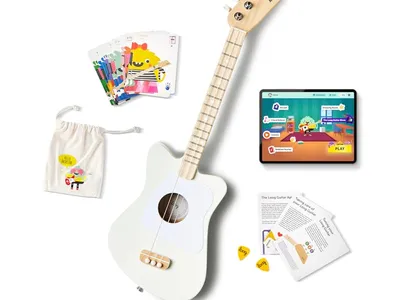
Loog 3-String Kids Guitar
Real acoustic guitar designed for small hands. 3 strings make chords easier. For 3-9 year olds ready for their first instrument.
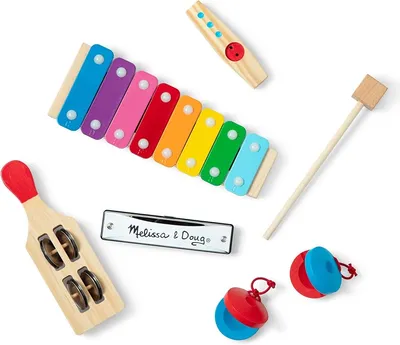
Melissa & Doug Band-in-a-Box Percussion Set
10 wooden percussion instruments for the 3-7 year old musician. Louder than parents want, joyful for kids.
Frequently Asked Questions
What's a good first instrument for a young grandchild?
For 3-5 year olds, a percussion set like the Melissa & Doug Band-in-a-Box ($20-35) is the right starting point — no technique required, just rhythm and joy. For 4-8 year olds showing musical interest, the Loog 3-String Kids Guitar ($70-110) is a real acoustic guitar designed for small hands. For 6+ wanting to learn piano, the Yamaha PSS-A50 mini keyboard ($70-110) is a 37-key compact keyboard with real instrument sounds. The principle: real instruments, not toys. Toy instruments sound awful and discourage kids from engaging seriously.
Are kids keyboards or pianos worth buying?
Yes, but go mid-range, not toy-grade. Toy keyboards with preset songs and cheap plastic keys frustrate any kid serious about learning. The Yamaha PSS-A50 ($70-110) is the sweet spot — 37 keys, real instrument voices, small enough for a bedroom. For a kid truly committing to piano, parents may want to invest in a proper 61-88 key digital piano ($200-600) eventually. Starting with the PSS-A50 is perfect for the 'is this going to stick?' phase.
Is a guitar a good gift for a kid?
The Loog 3-String guitar ($70-110) is a clever solution for young kids (3-10) — it's a real acoustic guitar with only 3 strings, making chord-learning easier. For teens and serious young musicians, a proper beginner 6-string acoustic ($100-200) — Yamaha FG800, Fender CD-60S, or the Taylor Academy 10 at the top end — is the right move. Clear with parents before any stringed-instrument gift, because noise and storage matter.
What music gifts should I avoid?
Four red flags: (1) toy-grade 'keyboard' or 'guitar' products that cost $20 and sound terrible — they discourage kids from taking music seriously; (2) electronic drum pads that are basically a noisemaker; (3) giant percussion sets for under-3s (they're more tantrum-inducer than instrument); (4) professional instruments ($500+) for a kid who hasn't expressed serious interest. The right music gift is a real instrument, sized to the child, that they can actually learn to play.
What about music-related gifts that aren't instruments?
Plenty of great options. Music lessons (5-10 sessions paid for, $150-500) are often the best music gift — real teaching beats self-taught for most kids. A subscription to a music-learning app (Simply Piano, Yousician, JoyTunes) is a good companion to an instrument. Concert tickets for teens — take them to see a band they love. A nice set of headphones for the music-listening kid ($50-150). Vinyl records or a record player for the retro-curious teen.
What's a good music gift for a teenager?
Teen music gifts shift heavily based on their interest level. For the casual teen music fan: concert tickets, a nice pair of headphones ($50-150), a streaming service gift card (Spotify, Apple Music). For the teen learning an instrument: a real upgrade of their current gear (better guitar, amp, microphone, or music software). For the teen making music: digital audio workstation software (Logic Pro, FL Studio — $60-200), a MIDI keyboard ($100-200), a condenser microphone ($50-200). Ask what they're doing musically, then upgrade it.