Best STEM Gifts for Grandkids Ages 8-12 (Grandparent's Picks, 2026)
Our Top Pick
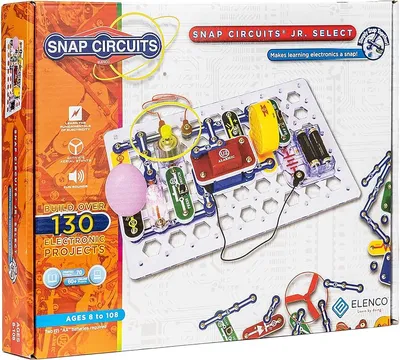
Snap Circuits Jr. Electronics Kit
Best single STEM gift for the 8-12 age range — 100+ projects, real electronics, survives rough handling.
The 8-12 age range is where STEM gifts either land big or disappoint hard. Kids at this age have opinions, they can tell when something is junk, and they’ll actually engage with good material for months. The three picks below have consistently earned their keep across dozens of grandparent-reported experiences.
Here’s the quick answer, then the nuance.
The Three Picks
1. Snap Circuits ($25-45)
Snap Circuits Jr. teaches real electronics through 100+ projects. Kids snap together components — resistors, capacitors, switches, speakers — to build working circuits. Everything is safe (no soldering, no high voltage), but the principles are genuinely real. A kid who completes the Snap Circuits book has the conceptual foundation to understand how every electronic device in their house works.
The Pro version (400+ projects) is for kids who really get into it. For most 8-12 year olds, the Jr. is plenty — it’ll last them a year or more.
2. KiwiCo Subscription ($24/month)
KiwiCo is the best single recurring STEM gift. For the 8-12 age range, the Tinker Crate (ages 9-16) is the right level — mechanical engineering, circuits, chemistry, physics. Every month, a new curated project arrives in the mail. The kid builds something real, learns the underlying concepts from included reading material, and the box includes everything needed (you don’t have to hunt for specific batteries or tools).
This is the gift for a grandparent who wants to give something every month — a year subscription ($240) is one of the best STEM gifts money can buy.
3. Thames & Kosmos Chemistry Lab ($50-95)
The Thames & Kosmos Chemistry Lab is the real deal. Real lab equipment (test tubes, alcohol burner, proper safety gear), real chemicals (the kind you can replace from a scientific supply store when they run out), and a thick experiment manual. This is a kit for a kid who loves science class and wants to do it at home.
Caveat: this one needs a parent or grandparent comfortable supervising. If your grandchild is responsible and their parents are OK with supervised chemistry, it’s incredible. If not, start with Snap Circuits or KiwiCo first.
Good Second-Tier Options
If your grandchild already has the basics, or you want something different:
- LEGO Architecture sets — engineering + design. Great for spatial reasoning.
- Sphero Mini robot ($50) — coding-controlled robot. Much more affordable than Mindstorms, still teaches real programming.
- A microscope with real slides (not toy, a real starter model — around $80) — unlocks a hobby for kids who love biology.
- An astronomy telescope (Celestron FirstScope, around $60) — gateway to astronomy for space-obsessed kids.
What to Avoid
- “Ultimate Science Kit!” products under $15 — plastic junk with 2-3 “experiments” that are glorified crafts. Brand name matters in STEM gifts.
- Magic science kits — usually illusions, not science. Misleading.
- Kits with proprietary ingredients that can’t be replenished — once the included chemicals are used, the kit is dead weight. Thames & Kosmos uses standard chemicals you can buy separately.
- Anything that requires a phone or iPad for kids who don’t already have one. The gift should stand on its own.
By Specific Interest
If you know your grandchild’s specific fascination:
Space → Astronomy telescope + a good illustrated book about the solar system Engineering / Machines → KiwiCo Tinker Crate + LEGO Technic set Chemistry → Thames & Kosmos Chem Lab (or C1000 for younger) Programming / Coding → Raspberry Pi starter kit (age 11+) or Scratch programming book Robotics → Sphero Mini (budget) or LEGO Mindstorms (splurge) Biology / Life sciences → Microscope + slide set, or a bug-catching kit for summer
Setting Kids Up for Success
A STEM kit is only as good as the environment around it. A few tips from grandparents who’ve watched these play out:
- Start small, add later. A full chemistry lab is overwhelming. A starter kit plus a “we’ll get the next level if you stick with this” promise works better.
- Ask the parents about timing. The gift arrives in winter, lands midway through the school year — some kids have zero time; others are desperate for indoor projects.
- Build together the first time. Your first project with them is the difference between “this is cool!” and “I don’t know how to start.” One hour of co-building pays off.
STEM gifts are an investment — not just in money, but in time together. The three above are the ones we’ve seen pay off most consistently.
Full Comparison: Our Picks
Snap Circuits Jr. Electronics Kit
Best single STEM gift for the 8-12 age range — 100+ projects, real electronics, survives rough handling.
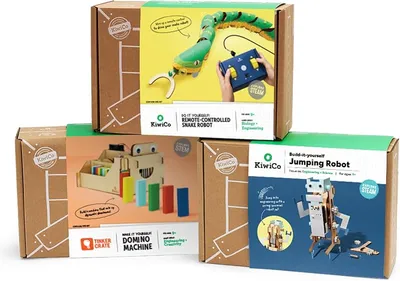
KiwiCo Monthly Subscription
Curated monthly projects — the variety is the value. Tinker Crate is the sweet spot for this age.
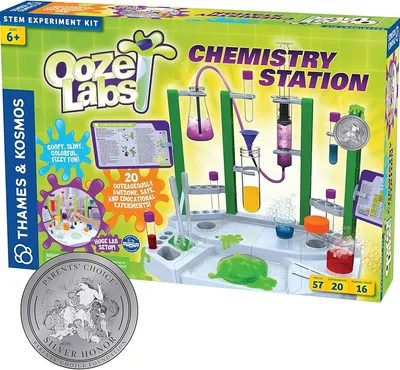
Thames & Kosmos Chemistry Lab
A real home chemistry lab. For kids who want to actually do experiments.
Frequently Asked Questions
What's the best STEM gift for a 10-year-old?
For most 10-year-olds, Snap Circuits Jr. or Snap Circuits Pro (the bigger version) is the single best entry point — it teaches real electronics through 100+ projects, the components snap together safely, and kids actually build things that light up and make noise. If your grandchild already has one or is past that level, a KiwiCo Tinker Crate subscription or a Thames & Kosmos chemistry set are strong next-step picks.
Are subscription STEM boxes worth it?
For kids in this age range — yes, often. KiwiCo's Tinker Crate (ages 9-16) and Eureka Crate (ages 14-16) are curated by real engineers, the projects are non-trivial, and getting something every month creates anticipation. The per-box cost works out to $20-25 when paid annually, which is comparable to buying kits individually. The variety is the real value — your grandchild gets exposed to mechanical engineering, chemistry, coding, and more without you needing to pick each time.
What about coding kits and robotics?
Good options exist but vary wildly in quality. For ages 8-10, the KOOV robot kit by Sony and LEGO Mindstorms are both excellent but expensive ($250+). For ages 10-12, the Raspberry Pi starter kit (around $100) is a real computer with real programming — a fantastic gift for a kid who's genuinely curious, but can feel intimidating for less-curious kids. If you're unsure, start with Scratch (free) on a tablet they already have, or a Sphero Mini robot ($50) before committing to a larger kit.
My grandchild already did chemistry last year in school. Too redundant?
Actually often the opposite. School chemistry at this age is usually superficial — looking at rocks, watching demonstrations. A Thames & Kosmos set lets them do real experiments with real lab equipment (test tubes, alcohol burner, proper safety gear). Most kids who like science in school LOVE having their own lab kit at home. If they didn't like chemistry in school, pivot to the Thames & Kosmos Physics or Biology sets, or go with electronics.
What should I avoid?
Skip 'Ultimate Science Kit!' products from unknown brands under $15 — they're nearly always plastic junk with 2-3 'experiments' that are glorified craft projects. Also skip anything called 'Magic' science kit (usually illusions, not science). And be wary of kits with a lot of proprietary ingredients that can't be replenished — once the included chemicals are used up, the kit is done. Thames & Kosmos uses standard chemicals you can buy separately, which is one reason we recommend them.